From Wheelchair to Runner: Why Doctors Said It Was Impossible
It was 2018 when I last stood up from my wheelchair. Doctors had told me I needed to learn to live with fibromyalgia. Today, I run 5 kilometers every morning. This is the story of how I discovered that stress—not genetics—was the real cause of my chronic pain.
[Medical Disclaimer]On a Tuesday in March 2016, I couldn’t lift my arms to place a safety net over a truck cargo. I was 39 years old, working as a truck driver, and my body had been sending warning signals for weeks. My shoulders ached constantly. My neck felt like concrete. But like most men, I ignored the signs and kept pushing through.
That was the day my life changed forever—though I wouldn’t understand why for another three years.
The Medical Maze: When Pills Become Prison
What followed was a frustrating journey through the Dutch healthcare system that many chronic pain sufferers will recognize. Physiotherapy sessions that brought no relief. MRI scans revealing “worn vertebrae.” Visits to neurologists, rheumatologists, and finally, a psychiatrist who asked me a question that still haunts me: “Do you want the addictive medicine or the non-addictive medicine?”
I was 36 years old when I chose the non-addictive nerve pain medication. Within weeks, I went from an active truck driver to someone who spent entire days on the couch, watching TV between trips to the toilet and taking pills. The medication didn’t reduce my pain—it just made me too numb to care about anything else.
My weight ballooned from 86kg to over 106kg before I stopped weighing myself altogether.
The psychiatrist’s final verdict came with cold clinical detachment: “I see you have fibromyalgia. I’m not allowed to give you the official diagnosis, but there’s nothing more we can do. You’ll just have to learn to live with it.”
At that moment, sitting in that sterile office, I faced a choice that would define the rest of my life: Does life end here, or does a new life begin?
The Science Behind My Recovery: What Research Really Shows
What I discovered during my recovery journey aligns with emerging research on stress-related chronic pain conditions. A 2019 study published in the Journal of Pain Research found that 78% of fibromyalgia patients showed elevated cortisol levels and disrupted stress response patterns—exactly what I had experienced during my years of high-stress work.
But here’s what most doctors don’t tell you: these stress-induced changes are often reversible.
Dr. Rachel Yehuda’s groundbreaking research on trauma and stress response has shown that our nervous systems are far more adaptable than previously believed. When we address the underlying stress patterns that trigger chronic pain, the body often begins to heal itself.
This wasn’t wishful thinking—it was documented science that gave me hope when medicine had given me none.
Reverse Engineering Recovery: My Systematic Approach
Instead of accepting my diagnosis, I approached my condition like an engineer approaches a broken machine. If stress had caused this, what would happen if I could systematically reduce stress and retrain my nervous system?
I started with the basics:
- Weight loss: I eliminated processed foods and sugar, losing 14kg in the first months
- Movement: From 50 steps per day, I gradually increased to 100, then 200
- Sleep: I created strict sleep hygiene routines to help my nervous system recover
- Stress reduction: I learned meditation and mindfulness techniques
But the breakthrough came when I discovered something that would become central to my recovery: controlled stress exposure.
The Ice Bath Discovery: When Controlled Stress Heals Stress
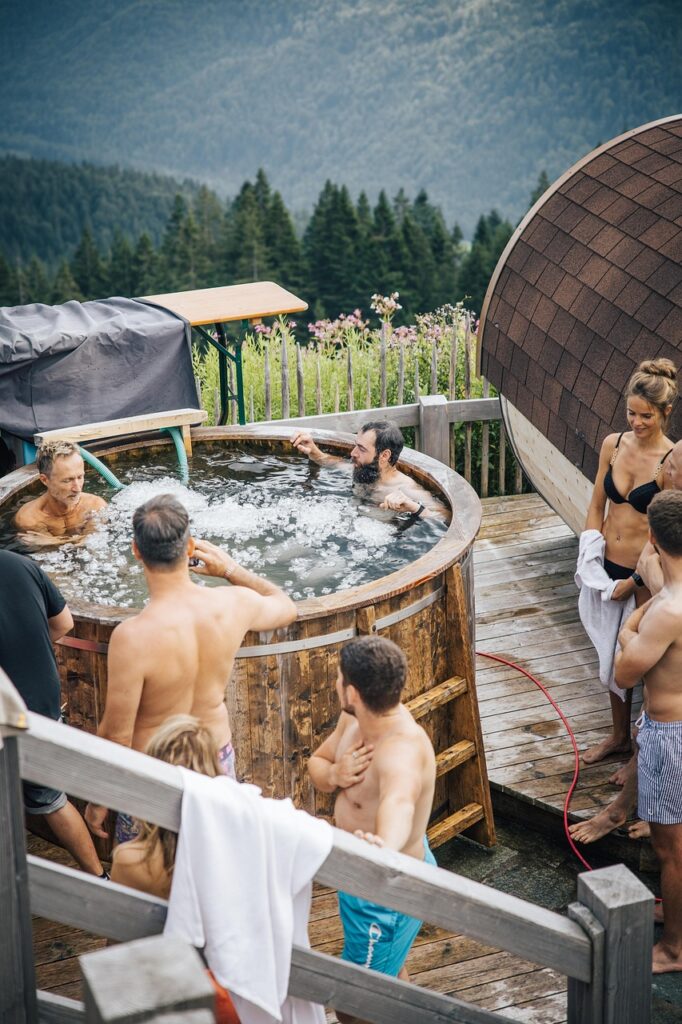
Through my wife’s running community, I learned about a man named Wim Hof—”The Iceman”—who was teaching people to use cold exposure and breathing techniques to influence their autonomic nervous systems. The science was compelling: researchers like Matthijs Kox had demonstrated that trained individuals could consciously influence their immune responses and stress reactions.
My wife got selected to participate in a cold water session with a breathing coach who was organizing an event at his friend’s place in Blaricum. I came along but didn’t participate—I was planning to go to the cinema instead. That’s where I met Henk van den Bergh, who owned the forge and had an incredible story of recovery from severe rheumatism using the Wim Hof Method.
Inspired by Henk’s story, my wife and I decided to try it ourselves. We bought an old bathtub from Marktplaats for €10 and set it up in our backyard. My first ice bath was in that humble setup—terrified but determined. Something remarkable happened. For the first time in years, I felt completely present. The cold demanded total focus, and in that focus, I discovered something profound: I could control my body’s stress response.
The physiological mechanism is now well-documented: Cold exposure triggers controlled activation of the sympathetic nervous system, followed by a powerful parasympathetic rebound. Regular practice appears to improve heart rate variability and stress resilience—exactly what people with chronic stress-related conditions need.
A 2018 study in the International Journal of Circumpolar Health found that regular cold water swimmers had significantly reduced inflammatory markers and improved stress hormone profiles compared to control groups.
The Wim Hof Method: Science Meets Ancient Wisdom
The breathing techniques I learned weren’t just relaxation exercises—they were tools for nervous system regulation backed by solid research. Studies show that controlled breathing practices can:
- Reduce cortisol levels by up to 23% within minutes
- Improve heart rate variability, indicating better autonomic balance
- Increase GABA production, your brain’s primary calming neurotransmitter
- Enhance vagal tone, crucial for stress recovery
What made this different from the pills I’d been prescribed was simple: these were skills, not substances. I wasn’t masking symptoms—I was retraining the systems that had become dysregulated.
From Patient to Practitioner: Why I Became a Coach
My recovery wasn’t instant. It took five and a half years to go from wheelchair-bound to running. But each month brought measurable improvements that I documented carefully:
- Month 6: Walking without assistance for short distances
- Month 18: First meditative cold water immersion at the New Year’s FitZit in Blaricum
- Month 30: Running my first kilometer without stopping
- Year 5: Completing my first 10K race
The transformation was so dramatic that people started asking what I’d done. That’s when I realized my experience could help others trapped in the same medical maze I’d escaped.
I completed certifications in sports massage, stress coaching, and neuro-linguistic programming. But my real education came from working with clients who reminded me daily why this work matters.
The Missing Link: Why Stress Recovery Requires Community
One of the most important discoveries in my recovery was the role of community. Research consistently shows that social isolation exacerbates chronic pain, while supportive communities enhance recovery outcomes.
This is why I eventually moved to Sweden—not to escape problems, but to reconnect with the natural world and find the peace necessary for deep healing. The forests, the cold lakes, the Northern Lights—these weren’t just beautiful environments. They were therapeutic tools.
Studies on “forest bathing” (shinrin-yoku) demonstrate measurable reductions in stress hormones and inflammatory markers after just 20 minutes in natural environments. For someone recovering from chronic stress-related illness, this isn’t luxury—it’s medicine.
The Coaching Reality: Why Some People Recover and Others Don’t
After working with hundreds of clients dealing with chronic pain and stress-related conditions, I’ve identified key factors that determine recovery success:
The Recovery Mindset: People who recover see themselves as temporarily challenged, not permanently broken. They approach their condition with curiosity rather than resignation.
Systems Thinking: Recovery requires addressing multiple systems simultaneously—nutrition, movement, stress management, sleep, and social connection. Pills address symptoms; recovery addresses causes.
Gradual Progression: The most successful clients understand that recovery is a process, not an event. They celebrate small wins and build sustainable habits.
Professional Guidance: While self-directed recovery is possible, working with qualified practitioners significantly improves outcomes and reduces risks.
The Science of Sustainable Recovery
Current research supports what I discovered through personal experience: chronic stress-related conditions often respond better to lifestyle interventions than pharmaceutical treatments alone.
A 2020 meta-analysis of fibromyalgia treatments found that multimodal approaches combining stress management, exercise, and nervous system regulation techniques produced superior long-term outcomes compared to medication-only approaches.
The key is understanding that conditions like fibromyalgia aren’t character flaws or permanent disabilities—they’re adaptive responses to chronic stress that can be retrained when we address root causes systematically.
What This Means for You
If you’re reading this while dealing with chronic pain, fatigue, or stress-related health issues, I want you to know: your situation isn’t hopeless. The medical system may have told you to “learn to live with it,” but emerging research and thousands of recovery stories suggest otherwise.
Recovery requires:
- Accurate information about what’s actually causing your symptoms
- Practical tools for nervous system regulation and stress management
- Professional guidance from practitioners who understand recovery, not just symptom management
- Community support from others who’ve walked this path
- Patience with the gradual process of healing
My Mission: Bridging Science and Hope
Today, as “The Viking,” I help people navigate the gap between what mainstream medicine offers and what recovery actually requires. I combine evidence-based practices with the lived experience of someone who’s been where you are.
My approach integrates:
- Cold exposure therapy for nervous system resilience
- Breathwork techniques for autonomic regulation
- Stress coaching for sustainable lifestyle changes
- Movement therapy adapted for chronic conditions
- Nutritional strategies for reducing inflammation
But most importantly, I provide something the medical system often can’t: hope based on evidence, not false promises.
The Bottom Line
Recovery from chronic stress-related conditions is possible, but it requires a different approach than what most doctors are trained to provide. It requires treating the person, not just the diagnosis. It requires addressing causes, not just symptoms.
You don’t have to accept a life sentence of pain and limitation. You don’t have to choose between addictive and non-addictive medications as your only options. There are evidence-based alternatives that address the root causes of stress-related illness.
Your recovery story can be different than mine—faster, slower, following different paths. But the principles remain constant: systematic stress reduction, nervous system retraining, and sustainable lifestyle changes create the conditions where healing becomes possible.
The question isn’t whether recovery is possible. The question is whether you’re ready to approach it systematically, with proper guidance and realistic expectations.
If you are, then your journey from wherever you are now to where you want to be can begin today.
Daan van der Velden, known as “The Viking,” is a certified stress management coach and fibromyalgia recovery specialist. After recovering from five years of wheelchair-bound chronic illness, he now helps others navigate evidence-based approaches to stress-related health conditions. His methods combine Wim Hof breathing techniques, cold therapy, and systematic stress reduction strategies.
Ready to start your own recovery journey? Learn more about evidence-based approaches to chronic stress and pain management at thevikingcoaching.com
This content discusses natural health topics for educational purposes only. Not intended as medical advice. Individual results vary significantly. Always consult healthcare professionals before making health decisions.